If you farm anywhere within the CLAAS FARMPOINT footprint, there's a good chance you already…
25 Years of Precision: How the CLAAS LEXION Combine Revolutionized Harvesting in the U.S
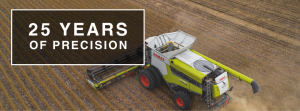
This year marks a monumental milestone in the CLAAS journey. Twenty-five years ago, the first U.S.-assembled CLAAS LEXION rolled off the factory line and into the hands of U.S. farmers.
Since then, nearly 10,000 combines have been assembled in Omaha, Nebraska, at the CLAAS North American Headquarters to meet the needs of American farmers.
Looking back on the last 25 years of LEXION provides a moment to reflect on the journey of innovation and progress in the world of agriculture. The LEXION combine series started as something unique. From its hybrid threshing and separation system to its innovative TERRA TRAC undercarriage, the hallmarks of the LEXION combine were nothing short of groundbreaking.
“The CLAAS LEXION combine is known for its tremendous throughput and harvesting capacity. For those who really want to maximize their acres per hour, that’s what the LEXION does,” says Jeff Gray, CLAAS product supervisor.
One of the ways the LEXION combine has differentiated itself from competitors over the years was through its innovative accelerated pre-separation (APS) system. The APS system allows the combine to separate the bulk of the grain from the straw before the main threshing process begins. This pre-separation reduces strain on the threshing mechanism, improving overall efficiency and reducing wear on critical parts.
By controlling the threshing and separation systems independently, the LEXION ensures higher grain quality and minimal losses, all while maintaining the highest throughput in the industry.
TERRA TRAC technology is another game-changer. It’s designed to reduce soil compaction and improve stability and efficiency. By using rubber tracks instead of traditional wheels, the weight of the LEXION is more evenly distributed across the soil, minimizing compaction and providing better traction in wet conditions. The technology also improves the overall stability of the machine, especially when operating on uneven terrain, leading to smoother operation under varying field conditions.
CEMOS AUTOMATIC, a self-learning operator assistance system, is a newer piece of technology that sets the LEXION apart from the competition. By actively sensing grain conditions and crop volume as it passes through the machine, CEMOS AUTOMATIC autonomously adjusts settings to maximize throughput while maintaining grain quality — even when driven by inexperienced operators.
The system ensures that the machine’s settings are constantly optimized for changing conditions in the field, reducing the potential for human error and improving consistency.
As we look ahead to the next 25 years of CLAAS in the U.S., we know that machines such as the LEXION combine will not only help U.S. farmers shape the future of smart farming but also help drive our industry forward with data and sustainability, which is why CLAAS manufactures the LEXION in America specifically for American farmers.
